
When Elisha became sick with the illness of which he was to die, Joash the king of Israel came down to him and wept over him and said, “My father, my father, the chariots of Israel and its horsemen!”
— 2 Kings 13:14
Here we read about the death of the great prophet Elisha. If ever there was a great man in biblical history, Elisha was certainly among them. The preceding chapters of 2 Kings are largely dedicated to his ministry — from the moment he took up the mantle from Elijah, confirmed by signs and wonders, to a life marked by miracles that were extraordinary and unlike almost anything else in Scripture. By any measure, Elisha was a remarkable man.
An Ordinary End to an Extraordinary Life
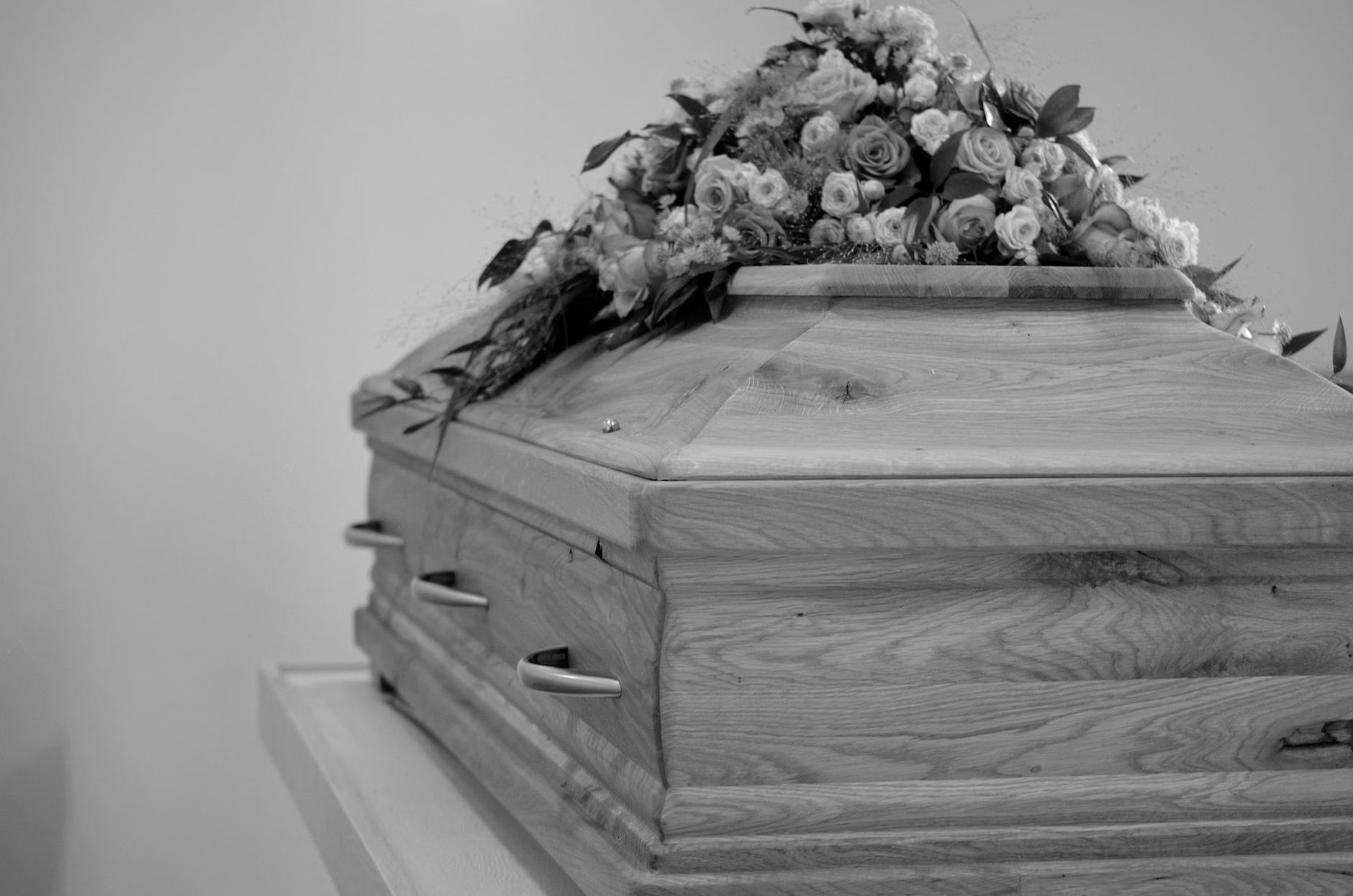
And yet what is striking about this verse is that, like every other man, Elisha came to his end. He died. And the manner of his death is perhaps the most unexpected detail of all — he simply got sick. For a man who had lived such an extraordinary life, his death is about as ordinary as it gets. No dramatic final miracle, no chariot of fire like his mentor Elijah. He fell ill, and he died.
We live in a world where death is something almost everyone resists — and understandably so, because not many people have full assurance of what comes after it. And so we observe man’s endless efforts to delay death — the precautions taken around health and safety, the pursuit of financial security, the careful management of risk. None of these things are inherently wrong. But they do expose a deep tendency in the human heart to cling to this life.
The Enemy’s Greatest Weapon
The devil is acutely aware of this tendency. In Hebrews 2 we are told that the enemy uses the fear of death to hold people in bondage and enslave them throughout their lives. And this is precisely part of why Jesus came — to destroy the works of the devil:
The Son of God appeared for this purpose, to destroy the works of the devil.
— 1 John 3:8
Paul declares triumphantly in 1 Corinthians 15 that the last enemy to be defeated is death — and that Jesus has conquered it. The resurrection of Christ is the decisive victory over the very thing that mankind has always feared most.
O death, where is your victory? O death, where is your sting?
— 1 Corinthians 15:55
No Need to Fear
This is the liberating reality for every believer. Because Jesus has conquered death, death is no longer something the Christian needs to fear. John writes:
We know that we have passed out of death into life, because we love the brethren.
— 1 John 3:14
And in 1 John 4:17-18, John outlines the mechanics of fear — that fear has to do with punishment and judgment. But those who confess Jesus as the Son of God, and in whom the love of God has been perfected, will have bold confidence on the day of judgment — not because of anything in themselves, but because of the advocate who stands before the Father on their behalf.
The fear of death is something that unites all of humanity across every background, every tribe, every nationality, every social class. It is the great equaliser. But we are told that this should not be the posture of the Christian. The believer can face that day with confidence — not because of their own goodness or achievement, but because of the one who has already answered for their case.
The Appointment We All Have
As we meditate on the end of Elisha’s life, may we come to an honest reckoning with the reality that there is a day coming — a day none of us knows — when we too will depart this life. We will stand before the judgment seat of Christ and give account.
The only thing that will give us true comfort and confidence on that great day is our confession of Jesus Christ as Lord and Saviour, and our trust in the complete sufficiency of His finished work on the cross for our full salvation.
And inasmuch as it is appointed for men to die once and after this comes judgment.
— Hebrews 9:27
Amen.


Leave a Reply