
Greetings chosen ones by God,
Today, let’s look at Jesus’ decision-making process in recruiting His twelve apostles:
“And He went up on the mountain and summoned those whom He Himself wanted, and they came to Him.”
— Mark 3:13
Mark summarizes this process, as he does many events in his gospel. Let’s explore a parallel passage from Luke that provides more context to the scene:
1. Preparation
“Now it happened that at this time He went off to the mountain to pray, and He was spending the whole night in prayer to God.”
— Luke 6:12
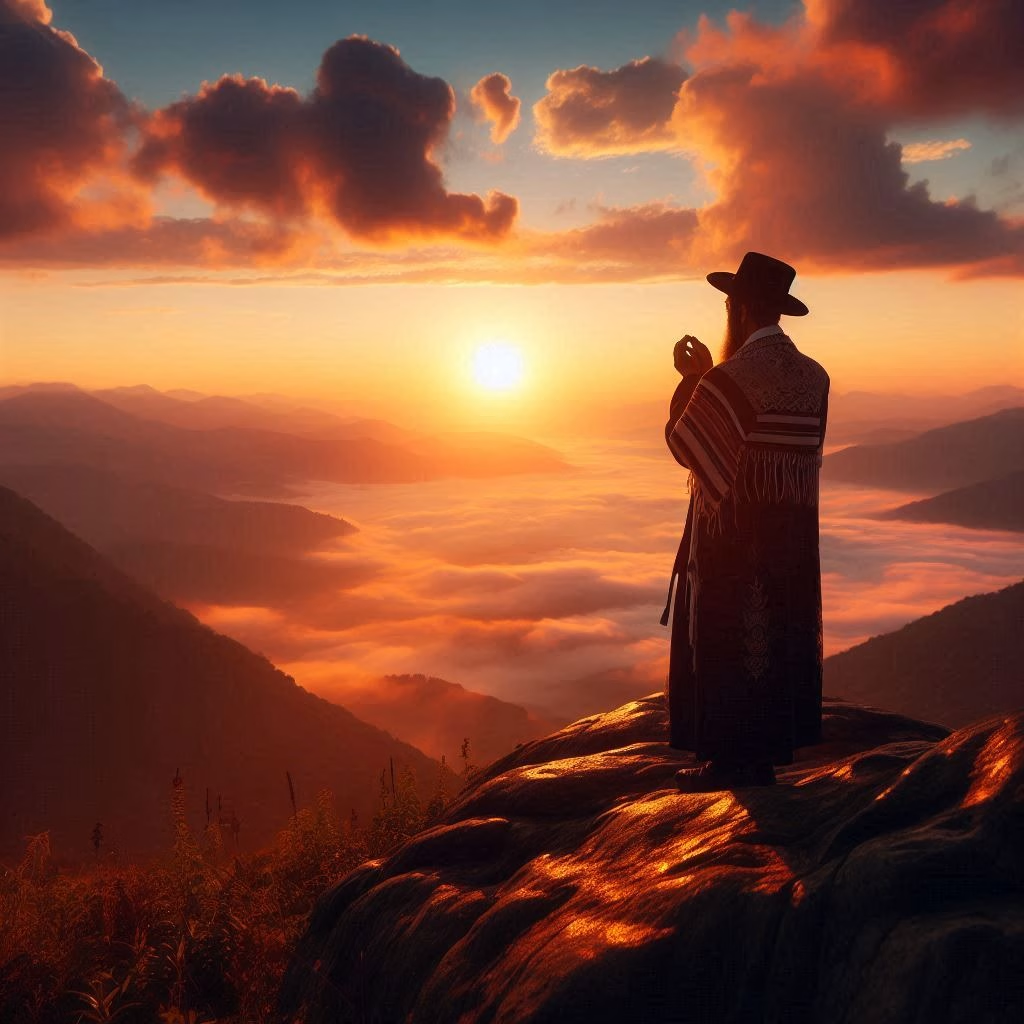
Immediately, we are drawn back to one of Jesus’ common practices: prayer. Jesus is about to make a major decision, and He models for us what one should do when faced with such a situation. He removes distractions by going off to the mountain.
This is something simple that we often take too lightly. The distractions of life can be overwhelming, making it difficult to have a quiet mind to make decisions.
Jesus’ approach was to clear out the clutter first. Let’s not forget that by going up the mountain, He was putting some distance between Himself and the multitudes that constantly followed Him. More than that, He was also setting some distance between Himself and His own followers. All of this was done to have a quiet time with His Father in prayer.
This is something we can easily model, and it can greatly improve our decision-making process. Sometimes, we fail to make decisions with clear and sober minds because we’re weighed down by the challenges of life and the people around us.
To the apostle Paul, this move for isolation was so important that he even encouraged married couples to temporarily abstain from physical intimacy for the purpose of prayer:
“Stop depriving one another, except by agreement for a time, so that you may devote yourselves to prayer, and come together again so that Satan will not tempt you because of your lack of self-control.”
— 1 Corinthians 7:5
2. Prayer
Jesus’ purpose for secluding Himself from the crowd wasn’t just to cool off. Luke tells us that He went to the mountain to pray. Here, we see something else we may take too lightly: Jesus understood that all things must align with the Father’s will. At one point, Jesus put it this way:
“For I have come down from heaven, not to do My own will, but the will of Him who sent Me.”
— John 6:38
For this to be so, Jesus kept constant communion with God the Father in prayer. Luke also tells us how much time Jesus spent praying on the mountain:
“And He was spending the whole night in prayer to God.”
There’s a sense in which Jesus was not rushing into this. He was about to make a decision that would affect the rest of His ministry. The disciples He would choose would become the foundation of the Church. This was not a light decision by any means:
“…having been built on the foundation of the apostles and prophets, Christ Jesus Himself being the cornerstone.”
— Ephesians 2:20
This was not a quick five-minute prayer. Jesus spent the whole night in prayer, in isolation from distractions, so that the decisions He made were fully aligned with the Father’s will.
He modeled for us how we should approach significant decisions. They shouldn’t be made hastily but through long, meditative, and God-focused prayers, where we pour ourselves before God, submit to His will, and trust what He ordains. James tells us that such prayers can accomplish much:
“Therefore, confess your sins to one another, and pray for one another so that you may be healed. The effective prayer of a righteous man can accomplish much.”
— James 5:16
Part of what prayer accomplishes is a willingness to submit to God’s will, trusting that what He has ordained is truly for His glory.
3. Proceeding
“And when day came, He called His disciples to Him and chose twelve of them, whom He also named as apostles.”
— Luke 6:13
Finally, we see Jesus making His decision. Jesus was not caught up in decision fatigue. This sometimes happens when we face major decisions—out of fear, we become stuck on the details, procrastinating because we fear making the wrong choice.
In this state of indecision, we may run out of time and end up making a rushed decision, which is one of the worst ways to proceed.
From Jesus, we see a model of not getting caught up in fear or anxiety over the outcome. After preparing by spending time alone and in prayer with the Father, He made the decision without hesitation.
Remarkably, this decision aligned with what had already been foretold. The team He chose would become foundational to building up the Church. Even Judas Iscariot, who would later betray Him, was part of the plan, according to Scripture. All of this was in line with God’s divine providence. The decision was committed to God, which meant that what God brought to pass was right.
“The heart of man plans his way, but Yahweh directs his steps.”
— Proverbs 16:9
Jesus never regretted His choice of disciples. Throughout His ministry, though they would argue, lose faith, fight for high positions, and even betray Him, Jesus never backed down from His decision.
Mark’s summary is simple: “He summoned those whom He Himself wanted, and they came to Him.”
I pray that we can learn from Jesus’ decision-making process in the recruitment of the twelve. May we remove distractions, commit everything to God in prayer, and proceed with our decisions, trusting God without regret or grumbling.
May the Lord give you wisdom in all your decision-making.
Leave a Reply