
Hello beloved of God,
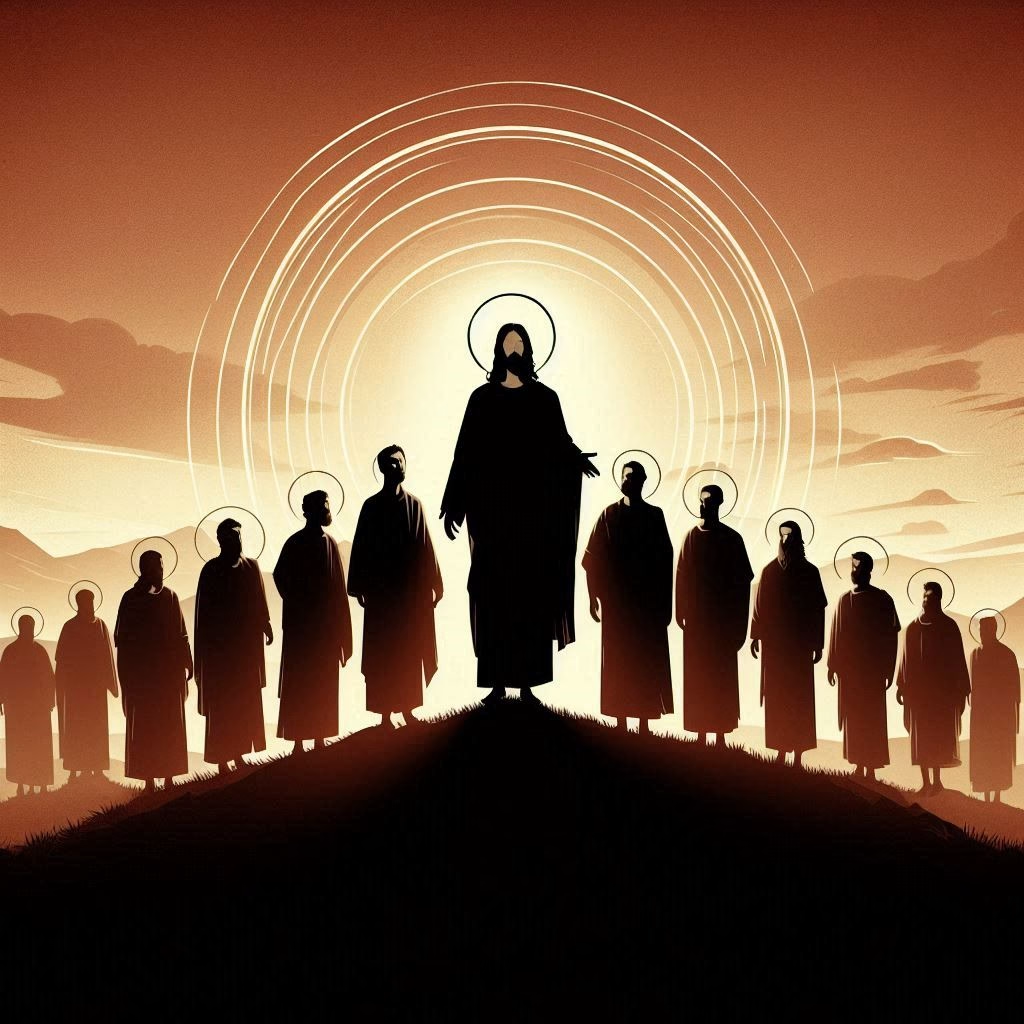
Today, let’s take a look at the group appointed by Christ to be His apostles:
And He appointed twelve (whom He also named apostles) to be with Him and to send them out to preach, and to have authority to cast out demons.
— Mark 3:14-15
After going up to the mountains to pray all night, He came down and appointed 12 of His followers. Mark tells us that He also named them apostles. The word Mark uses for apostles means “a messenger, one sent on a mission.” There are certain aspects we can focus on to learn more about their calling:
The Task
We see that they were appointed to go and preach. Here, the word “preach” means proclaiming a specific message. The message they were sent to proclaim was the same message that Jesus was proclaiming: the kingdom of God is at hand, and people need to repent of their sins. Later on, we see this message included the fact that Jesus was the Messiah, and He had come to save the lost.
And Peter said to them, “Repent, and each of you be baptized in the name of Jesus Christ for the forgiveness of your sins; and you will receive the gift of the Holy Spirit. For the promise is for you and your children and for all who are far off, as many as the Lord our God will call to Himself.”
— Acts 2:38-39
This was an essential function of the apostle. The title of apostle was not just a position of honor. It came with a very specific task of preaching the gospel.
Today, we see this title abused in various ways. Some proclaim themselves as apostles of Christ but do not meet the qualifications mentioned in the book of Acts.
Therefore it is necessary that of the men who have accompanied us all the time that the Lord Jesus went in and out among us—beginning with the baptism of John until the day that He was taken up from us—one of these must become a witness with us of His resurrection.”
— Acts 1:21-22
The apostles we see today often contradict the ones we see in the New Testament. While the task of the apostles in the New Testament was very specific—to preach the gospel—many so-called apostles today abuse their authority, extorting the very flock they are supposed to lead. These individuals gather wealth for themselves by deceiving congregations desperate for relief from life’s challenges. Instead of preaching the true gospel, they spread false teachings.
For the time will come when they will not endure sound doctrine, but wanting to have their ears tickled, they will accumulate for themselves teachers in accordance to their own desires.
— 2 Timothy 4:3
Today, the title of apostleship has become a means for material gain. People use it to elevate themselves and exert authority over the unsuspecting. However, the true apostles in the New Testament were focused on their God-given task. This can be seen in the messages they shared with the early church:
And when I came to you, brothers, I did not come with superiority of word or of wisdom, proclaiming to you the witness of God. For I determined to know nothing among you except Jesus Christ, and Him crucified. And I was with you in weakness and in fear and in much trembling, and my word and my preaching were not in persuasive words of wisdom, but in demonstration of the Spirit and of power, so that your faith would not be in the wisdom of men, but in the power of God.
— 1 Corinthians 2:1-5
Here, we see Paul’s heart in preaching the gospel. He was committed to the task Christ gave him.
The Authority
Mark tells us that Jesus gave the apostles authority to cast out demons. In a parallel passage, we see Jesus elaborate on this authority:
And summoning His twelve disciples, Jesus gave them authority over unclean spirits, to cast them out, and to heal every kind of disease and every kind of sickness.
— Matthew 10:1
This authority extended not only to casting out demons but also to healing every kind of sickness. It’s essential to understand why Jesus gave them this authority. It wasn’t given to just anyone; it was specifically for the apostles to validate that they were sent by Christ.
Throughout scripture, we see that signs and wonders were the means by which God validated His messengers. These miracles demonstrated that those performing them were truly sent by God.
The perfect example is Jesus Himself. His miracles were not merely acts of kindness; they validated that He was sent by God. Nicodemus, a Pharisee, understood this:
This man came to Jesus by night and said to Him, “Rabbi, we know that You have come from God as a teacher; for no one can do these signs that You do unless God is with him.”
— John 3:2
Before Jesus, other prophets were validated through miracles. Moses, Elijah, and Elisha are prime examples:
Then Moses and Aaron went and gathered all the elders of the sons of Israel; and Aaron spoke all the words which Yahweh had spoken to Moses. He then did the signs in the sight of the people. So the people believed; and they heard that Yahweh cared about the sons of Israel and that He had seen their affliction. So they bowed low and worshiped.
— Exodus 4:29-31Answer me, O Yahweh, answer me, that this people may know that You, O Yahweh, are God, and that You have turned their heart back again.” Then the fire of Yahweh fell and consumed the burnt offering and the wood and the stones and the dust, and licked up the water that was in the trench. And all the people saw it and fell on their faces and said, “Yahweh, He is God; Yahweh, He is God.”
— 1 Kings 18:37-39
Jesus gave the same authority to His apostles so they could be validated as His messengers. The apostles understood this, using it to identify themselves:
The signs of a true apostle were worked out among you with all perseverance, by signs and wonders and miracles.
— 2 Corinthians 12:12
These miracles weren’t mere gestures of goodwill but served to authenticate the apostles as those sent by Jesus to establish the church.
In some instances, the apostles exercised their authority in church discipline. For example, Paul rebuked the Corinthian church for tolerating ongoing sin:
For I, on my part, though absent in body but present in spirit, have already judged him who has so committed this, as though I were present: in the name of our Lord Jesus, when you are assembled, and I with you in spirit, with the power of our Lord Jesus, deliver such a one to Satan for the destruction of his flesh, so that his spirit may be saved in the day of the Lord.
— 1 Corinthians 5:3-5
The apostles’ task and authority were given for the purpose of establishing the church:
So then you are no longer strangers and sojourners, but you are fellow citizens with the saints, and are of God’s household, having been built on the foundation of the apostles and prophets, Christ Jesus Himself being the cornerstone.
— Ephesians 2:19-20
In setting up the church, the apostles were instrumental in bringing forth the New Testament scriptures, ensuring that the church operated through the Word of God. Much of the New Testament was written by the apostles or under their guidance.
Since the canon of scripture is closed, we no longer have apostles of the same order as those in the New Testament. Therefore, as believers, we must be cautious of self-proclaimed apostles who claim to hold the same authority.
I pray that this word helps us understand the role of the apostles chosen by Jesus, their significance in setting up the church, and that it guards us against false apostles.
May spiritual wisdom be imparted to you.


Leave a Reply