
Hey friends,
Today, let’s take a look at another parable that gives us more insight into the sower and the seed:
And He was saying, “The kingdom of God is like a man who casts seed upon the soil;
— Mark 4:26
Jesus compares this illustration He’s about to give to the kingdom. The comparison is meant to show us how the kingdom of God works. Similar to the parable of the sower, this parable begins with the sower casting seed upon the soil.
From the parable of the sower, we know that the sower sows the word of God:
“Now the parable is this: the seed is the word of God.”
— Luke 8:11
This emphasizes the significant role that the word of God plays in the conversion of a sinner into a believer. The apostle Peter makes the same point, emphasizing that it is the word of God that is instrumental in the conversion of Christians:
For you have been born again not of corruptible seed but incorruptible, that is, through the living and enduring word of God.
— 1 Peter 1:23
As preachers of the gospel of Christ, we should never underestimate the essential role the word of God plays in the conversion of hearts. When we understand how the Holy Spirit uses the word to sanctify believers, we will learn to depend on that word in evangelism.
We ought to view the work of evangelism simply as the planting of the word of God in people’s hearts, allowing the word to do its work. It is folly to think that our works or style of evangelism, without the word, can achieve the same effect.
This reliance on the word of God is evident even in the parable that our Lord shares with His disciples:
And he sleeps and rises, night and day, and the seed sprouts and grows—how, he himself does not know.
— Mark 4:27
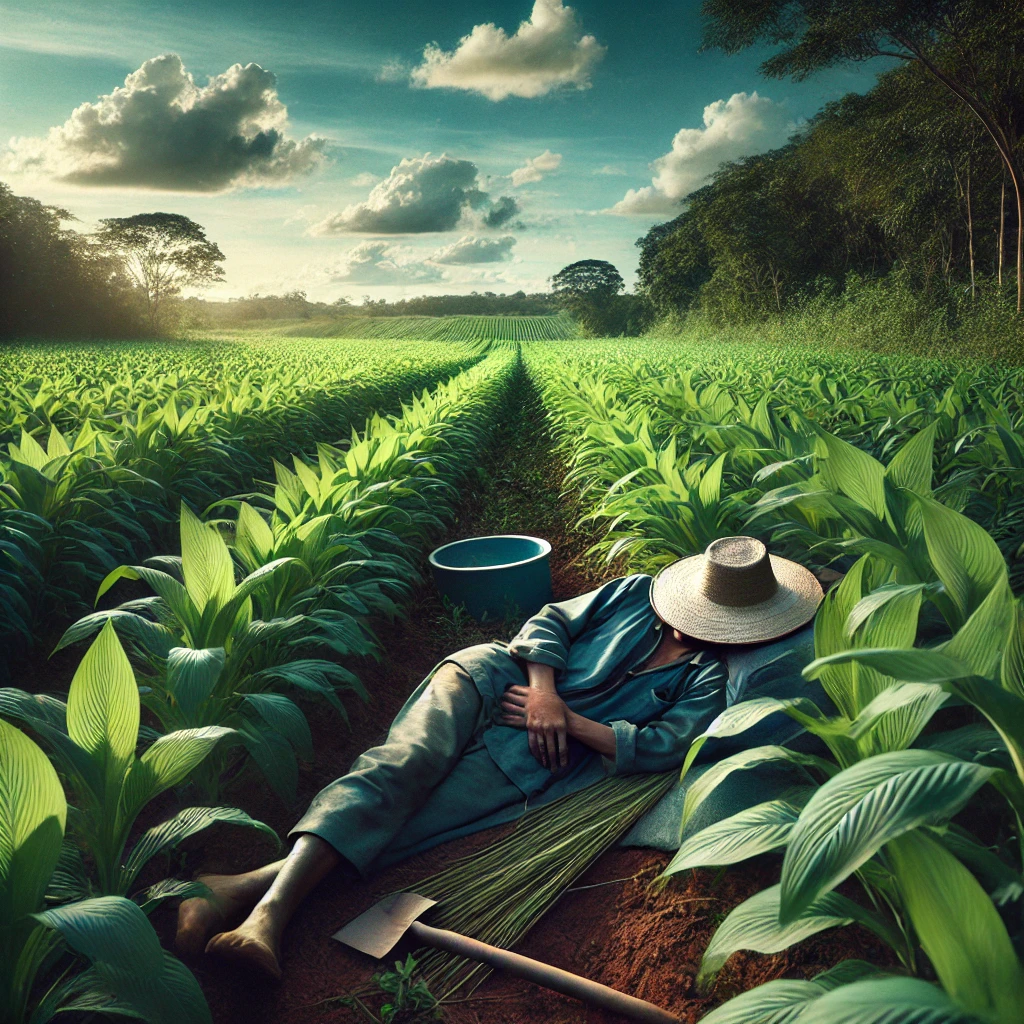
After the word is sown, the sower goes to sleep. The phrase “sleeps and rises, day and night” implies an ongoing process, part of the sower’s daily routine. The sower is not concerned with what is happening underground or in the field after the seed is sown. He trusts that, come harvest season, the seed will have produced a plant that bears fruit.
This should be the mindset of a believer who shares the gospel. The believer is to sow the seed and not busy themselves with how the seed turns into a plant. Instead, they should return to their daily routine, continuing in good works.
The soil produces crops by itself; first the blade, then the head, then the mature grain in the head.
— Mark 4:28
Our Lord lets us in on what happens while the sower is going about his daily routines. “The soil produces crops by itself.” After the word is sown, the process that follows is automatic. The Greek word used here is “automatos,” from which we get the word “automatic.” The work of God in the heart of man is an automatic process, controlled by the Holy Spirit, and not influenced by man.
The apostle Paul, in his letter to Titus, makes this point clear about who does the work in the heart during conversion:
He saved us, not by works which we did in righteousness, but according to His mercy, through the washing of regeneration and renewing by the Holy Spirit,
— Titus 3:5
After the word is presented and the seed is planted, what happens in the heart is the work of the Holy Spirit, who quickens the spiritually dead man to life through regeneration. This is the miracle of bringing the dead sinner to life. Once again, it’s important to remember that the sower is completely unaware of this process as it occurs in the sinner’s heart. Jesus pointed to a similar illustration in His conversation with Nicodemus:
The wind blows where it wishes and you hear its sound, but do not know where it comes from and where it is going; so is everyone who has been born of the Spirit.
— John 3:8
Our Lord describes the process of being born again as the wind blowing. We don’t know where the wind comes from or where it’s going, but we see its effects. The next verse in the parable speaks of the effects of the planted seed: the bearing of fruit and a ready harvest.
But when the grain is ripe, he immediately puts in the sickle, because the harvest has come.”
— Mark 4:29
The effects of the blowing wind and the sown word are seen in the ripe grain at harvest time. We see the sower return for the harvest. In keeping with the Great Commission, the sower is involved in both sowing seeds—making disciples of all nations—and harvesting—teaching them to observe all that the Lord has commanded. Jesus uses a similar illustration when He tells His disciples to pray for more laborers because the harvest is plentiful:
Then He said to His disciples, “The harvest is plentiful, but the workers are few. Therefore pray earnestly to the Lord of the harvest to send out workers into His harvest.”
— Matthew 9:37-38
I pray this will be the cry of our hearts—to be zealous in sowing the seed, not worrying about what happens between the sowing and the harvest, and being ready at harvest time to work the fields.
May the Lord put in us all a great desire to do the work of evangelism.
Leave a Reply