
Hello brothers and sisters,
Today, let’s look at the final part of John the Baptist’s preaching by the Jordan River:
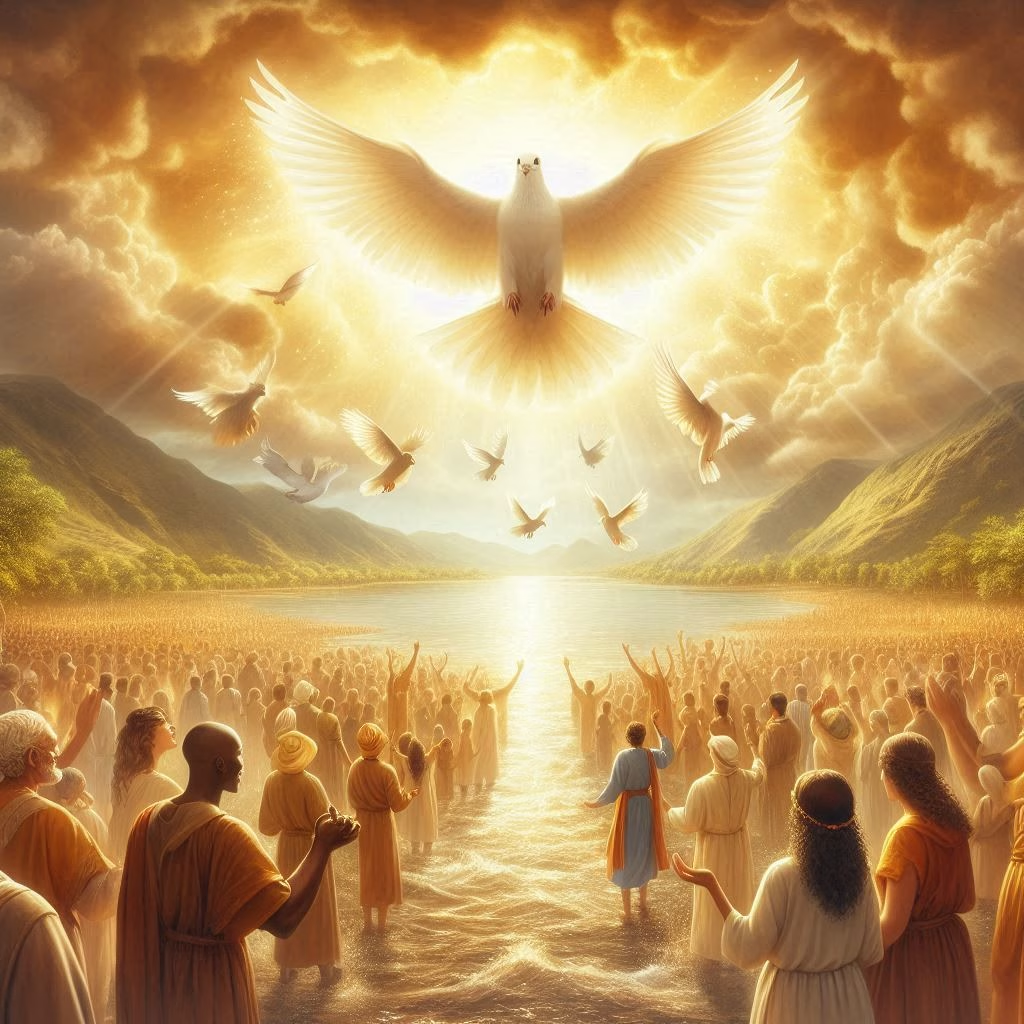
I baptized you with water; but He will baptize you with the Holy Spirit.”
— Mark 1:8
In this section, we see John making a distinction between his baptism and the kind of baptism that Jesus, the coming Messiah, would bring. This distinction is centered around the means by which the people would be baptized. To better understand the differences, let’s explore what these two have in common.
Firstly, we notice that both of these are baptisms. The word that Mark uses here for baptism is a transliteration of the Greek word “baptizō,” which means “to dip, immerse, sink;” we see that this baptism involves one being immersed into something.
John says he immerses into water, but Jesus would come and immerse the people into the Holy Spirit.
Baptism with Water
John says he’ll baptize with water. In the Old Testament, we see a couple of references to water being used in the cleansing process. One such reference is when God makes a promise to the people of Israel to sprinkle them with water and wash them clean:
Then I will sprinkle clean water on you, and you will be clean; I will cleanse you from all your uncleanness and from all your idols.
— Ezekiel 36:25
We also know that it was a tradition for those who wished to turn to Judaism to be baptized by immersing them into water and performing other rituals such as circumcision, giving of sacrifices at the temple, and adherence to the law of Moses.
The kind of baptism that John the Baptist was referring to was tied into the old ways. This baptism of repentance was meant to have the people acknowledge that they had disobeyed God and needed reconciliation.
However, we see John making a bigger proclamation. This proclamation is not merely something that would happen to believers on the outside but would rather happen to them on the inside. They would be baptized with the Holy Spirit.
This distinction is important because the Holy Spirit is actually the third person of the Holy Trinity. We see the Holy Spirit being involved with different tasks throughout Scripture. Most notable of these is the task of the Holy Spirit as the Life-giver. We see this first in Genesis when God breathes into Adam, and he came to life:
Then Yahweh God formed man of dust from the ground and breathed into his nostrils the breath of life; and so the man became a living being.
— Genesis 2:7
This breath of life that the text refers to can be linked to the Holy Spirit as the Hebrew phrasing that is used carries a double meaning for breath or air and Spirit.
Another popular instance of the Holy Spirit performing the task of Life-giver is when the angel Gabriel appears to Mary, the mother of our Lord Jesus, to explain how Mary would conceive:
The angel answered and said to her, “The Holy Spirit will come upon you, and the power of the Most High will overshadow you; and for that reason the holy Child shall be called the Son of God.
— Luke 1:35
This same task is what we see the Holy Spirit performing when John the Baptist proclaims that Jesus will baptize the people with the Holy Spirit. John is saying that the Holy Spirit will perform the task of giving life to those who will believe. The immediate question would be why someone who is already alive would need to be given life by the Holy Spirit. The answer to which demands we review the actual status of a person who has not placed their faith in Christ. The Holy Scriptures refer to such a one as a person dead in trespasses and sin:
And you were dead in your transgressions and sins, in which you formerly walked according to the course of this world, according to the ruler of the power of the air, the spirit that is now working in the sons of disobedience, among whom we all also formerly conducted ourselves in the lusts of our flesh, doing the desires of the flesh and of the mind, and were by nature children of wrath, even as the rest.
— Ephesians 2:1-3
This is the case for all those who have not placed their faith in Christ. The new life offered by the Holy Spirit is not given to one who is already alive, but rather, it’s offered to one who is dead in their trespasses and sin.
This baptism with the Holy Spirit has to do with Jesus Christ, making us alive by the life-giving Spirit:
even when we were dead in our transgressions, made us alive together with Christ—by grace you have been saved—
— Ephesians 2:5
John compares the two baptisms and points to the baptism with the Holy Spirit as the more superior of the two. He points to the baptism that will be offered by Jesus Christ as more significant than that of the Old Testament through the sacrificial system and one for the proselytes. We see that even when Paul met John the Baptist’s disciples and asked them if they had been baptized with the Holy Spirit, he had to teach them about the kind of baptism that Jesus brought about:
Then Paul said, “John baptized with the baptism of repentance, telling the people to believe in Him who was coming after him, that is, in Jesus.”
— Acts 19:4
We also learn this baptism with the Holy Spirit is one that unifies all believers. The baptism of the Holy Spirit is followed by the indwelling of the Holy Spirit. No one can say they are a Christian if they are not baptized with the Holy Spirit:
However, you are not in the flesh but in the Spirit, if indeed the Spirit of God dwells in you. But if anyone does not have the Spirit of Christ, he does not belong to Him.
— Romans 8:9
And finally, because the Holy Spirit indwells every single believer, there are no second-class citizens in the faith. We are all one in Christ:
For also by one Spirit we were all baptized into one body, whether Jews or Greeks, whether slaves or free, and we were all made to drink of one Spirit.
— 1 Corinthians 12:13
I pray that this word will remind us that as believers, having placed our faith in Christ by the power of God, we have been baptized with the Holy Spirit, and this is what makes us believers, being indwelled by the Holy Spirit.
May the fellowship of the Holy Spirit be with you.
Leave a Reply