
Hello dear ones,
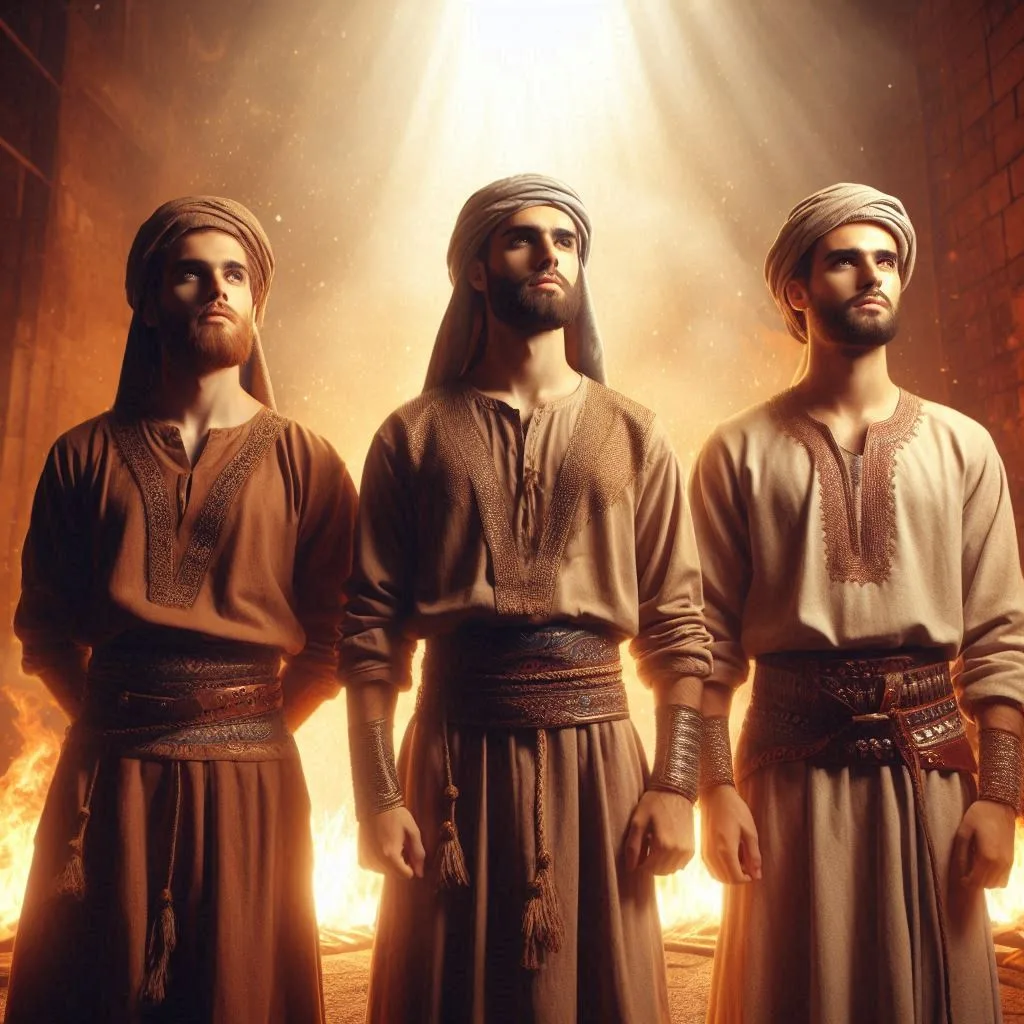
Today, let’s explore a short part of a narrative from the book of Daniel and learn from the resilience shown by believers:
But if not, let it be known to you, O king, that we are not going to serve your gods, and we will not worship the golden image that you have set up.
— Daniel 3:18
This passage comes right before the three young men, Shadrach, Meshach, and Abednego, are thrown into a furnace to die. This followed their unwillingness to “serve the king’s gods and worship the golden image of the king.”
The story narrates that these young men had faith in the salvation of the true and living God. They believed that God would save them from this catastrophe. This is what we see in the previous verses; this is their response to the king:
Shadrach, Meshach, and Abednego answered and said to the king, “O Nebuchadnezzar, we do not need to respond to you with an answer concerning this matter.”
— Daniel 3:16
Their character was evident as they clearly stated that their faith was in God and that they believed God was able to save them.
If it be so, our God whom we serve is able to save us from the furnace of blazing fire; and He will save us out of your hand, O king.
— Daniel 3:17
The same can be said for us today. When facing adversities in life, we need to remember that we have a God who is able to save us. Such a strong stance is even more crucial when adversities force us to worship anything or anyone other than our true and living God:
I am Yahweh your God, who brought you out of the land of Egypt, out of the house of slavery.
You shall have no other gods before Me.
You shall not make for yourself an idol, or any likeness of what is in heaven above or on the earth beneath or in the water under the earth.
— Exodus 20:2-4
This commandment is important for us to remember when the difficulties of life place us in a position of having to denounce God or turn to other gods. We need to have the same faith that Shadrach, Meshach, and Abednego had in the face of their trials.
There is something else that we learn from this short part of the story. It is common for us to remember this response as them proclaiming the might and ability that God has to save them and how they leaned on that ability and truly believed that God could indeed save them from the furnace.
However, there is another minor detail in their response to the king that we can learn from, and it can be a hindrance if we don’t fully comprehend the gravity of its impact:
But if not, let it be known to you, O king, that we are not going to serve your gods, and we will not worship the golden image that you have set up.
— Daniel 3:18
As they conclude their response to the king, the three say that even if God was not to save them from this tragedy, they would still not bow the knee to any other god nor worship any idol.
The profundity of this statement lies in the deep understanding of God’s sovereignty even in the face of clear and present danger. These three understood that God had the ability to save them from the fire but also that God reserved the right to choose how to be glorified, either in their life or their death.
By now, the words of Paul to the Philippians begin to echo as Paul builds up towards his profound statement “to live is Christ and to die is gain.” Paul says:
For I know that this will turn out for my salvation through your prayers and the provision of the Spirit of Jesus Christ, according to my earnest expectation and hope, that I will not be put to shame in anything, but that with all boldness, Christ will even now, as always, be magnified in my body, whether by life or by death.
— Philippians 1:19-20
Paul understands that God is sovereign and that He gets to choose how to glorify Himself, whether through Paul’s life or Paul’s death. Church history teaches that Paul would later glorify God in his death as he was martyred in AD 68.
Another narrative that shares some parallels is the story of Esther, right as she is about to speak for the people of Israel to the king:
Go, gather all the Jews who are found in Susa, and fast for me; do not eat or drink for three days, night or day. I and my young women also will fast in the same way. And thus I will go in to the king, which is not according to the law; and if I perish, I perish.
— Esther 4:16
As believers, we not only need to identify God’s ability to save us from our afflictions, but we also need to understand that God is sovereign and that He decides how to respond to our plea for mercy and salvation.
Like Shadrach, Meshach, and Abednego, we need to place our complete faith and trust in God’s plan to work all things for the good, to the praise of His glory.
Let’s meditate on these questions:
- Do we really trust that God possesses the ability to save us from the challenges we go through?
- Do we also believe that God is sovereign and has all the right to do whatever He pleases, even if it’s not the outcome we desire at the moment?
- Do we still put our faith in Him even when the outcome of a particular situation is not one we asked for?
I pray we can grow to a place of trusting God’s decisions.
May the peace of God be upon you,
Paul
Leave a Reply