
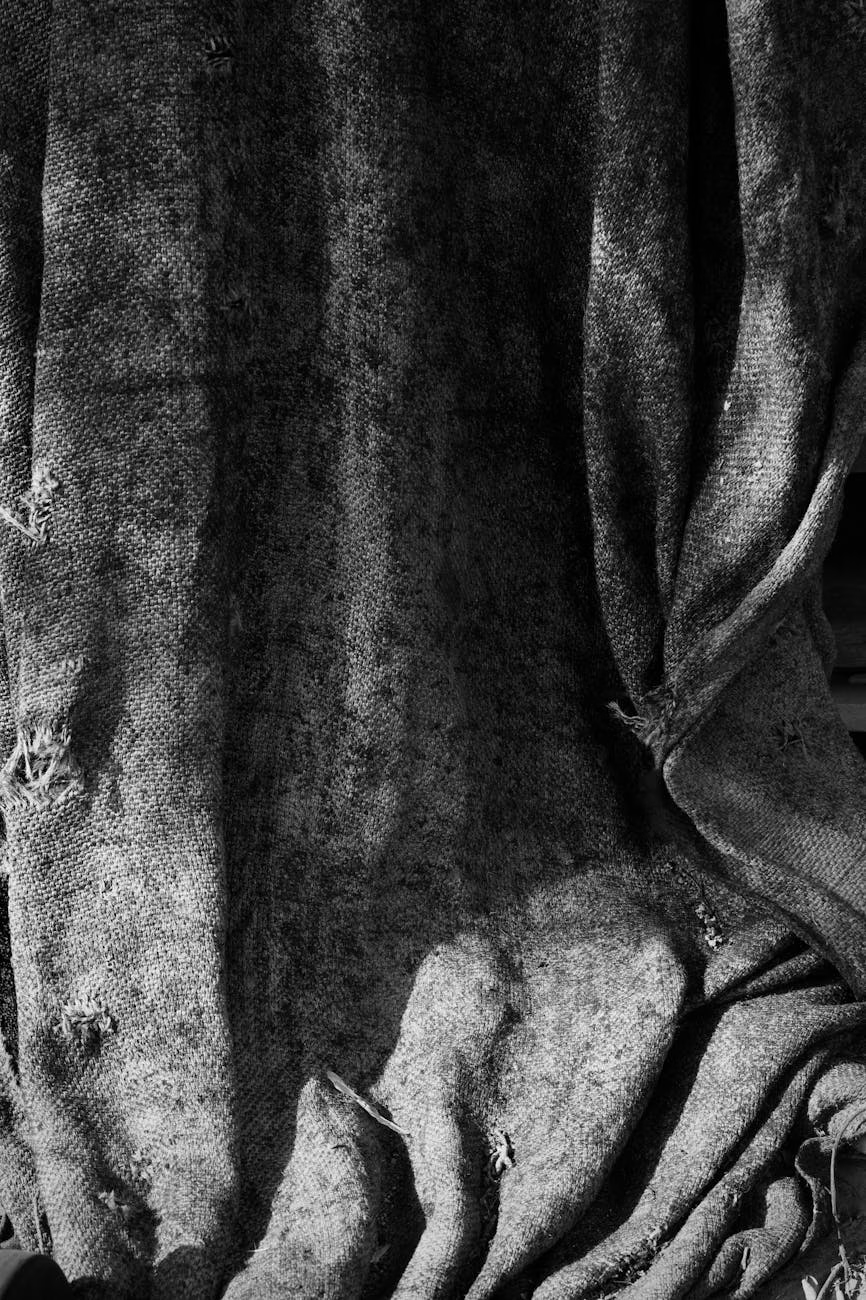
It came about when Ahab heard these words, that he tore his clothes and put on sackcloth and fasted, and he lay in sackcloth and went about despondently. — 1 Kings 21:27
Scripture gives us many examples of a repentant heart — from David, to Jonah, to the apostle Paul in the New Testament. But in this text we find a rather unlikely example of repentance: King Ahab, the king of the northern kingdom, who, upon hearing God’s decree concerning his fate, actually humbles himself before God.
The Sin That Preceded the Repentance
This moment of repentance came on the heels of one of Ahab’s most grievous sins. Consumed by greed, Ahab had desired a piece of land belonging to a man named Naboth — land that was a family inheritance and could not be sold. When Naboth refused, Ahab became angry and despondent. His wife Jezebel then stepped in and orchestrated a wicked plan that resulted in Naboth’s murder, allowing Ahab to take possession of the land.
It was at this point that God’s judgment was pronounced through the prophet Elijah:
“Thus says the LORD: ‘In the place where dogs licked up the blood of Naboth, dogs will lick up your blood, even yours.’” — 1 Kings 21:19
It was this pronouncement that drove Ahab to repentance — and in his response we see a picture of how repentance actually works.
Repentance Begins With Sin
Repentance always begins with sin — with a falling short, with something done that was not right in the sight of God. Scripture is clear on this reality:
For all have sinned and fall short of the glory of God. — Romans 3:23
David acknowledges in Psalm 51 that he was conceived in sin — that sinfulness is not merely something we do but something we are born into. Paul states it plainly to the Ephesians:
And you were dead in your trespasses and sins. — Ephesians 2:1
This is the reality every person must come to terms with. We enter this world as dead men walking — and this is precisely where repentance must begin its work.
The word repent means to change one’s mind. It means coming to a place of aligning our understanding of our deeds, our thoughts, and our very selves with what God says is true. We look at who we are and what we have done — and we agree with God. We agree that we are sinners. We agree that what He calls sin is indeed sin. And then, by His grace, we change course — we change the way we perceive what we have done and who we are.
The Pronouncement of Judgment
The next movement of repentance involves hearing the pronouncement against what has been done. In Ahab’s case, it took the prophet Elijah coming to him and declaring that God was not pleased — not with his covetousness, not with his sulking over what he could not have, and certainly not with the murder that Jezebel committed on his behalf.
Since God is holy — holy, holy, holy — He cannot look upon sin with any favour, and so He pronounced judgment upon Ahab.
In the same way, God has already pronounced judgment upon every sinner:
For the wages of sin is death, but the free gift of God is eternal life in Christ Jesus our Lord. — Romans 6:23
And in the Gospel of John we read that the one who does not believe is condemned already. Every sin already carries a prescribed judgment. There is no way out of that judgment by our own strength or effort.
The Posture of Helplessness
This brings us to the final and most crucial stage of repentance — the stage we see so clearly in Ahab. Upon hearing the pronouncement of God, he tore his clothes, put on sackcloth, fasted, and went about in deep dejection.
This is the posture of one who has realised that they cannot help themselves — that nothing they can do in and of themselves can undo the judgment God has pronounced, or undo the sin they have committed. Repentance reaches its depth when we come to terms with our own complete helplessness.
The words of the old hymn Rock of Ages capture this posture perfectly — nothing in my hand I bring, simply to Thy cross I cling. This is the position of every truly repentant sinner. We owe a debt to God that we cannot pay. And it is only at this point that we can wholly cast ourselves upon God’s mercy and grace.
This is exactly what happened with Ahab. He humbled himself before God — and God saw it:
“Do you see how Ahab has humbled himself before Me? Because he has humbled himself before Me, I will not bring the evil in his days, but I will bring the evil upon his house in his son’s days.” — 1 Kings 21:29
The Ministry of Reconciliation
Praise be to God who has made a way back to Himself — through the person and work of Jesus Christ. It is only when we arrive at a full realisation of the gravity of our sin and the total helplessness of our condition that we can cry out to God in His sovereign grace and mercy — pleading that He grant us repentance, that we turn from sin and turn toward Him, agreeing with Him about who we are, and running to Him for mercy and grace.
This is what Paul calls the ministry of reconciliation:
Now all these things are from God, who reconciled us to Himself through Christ and gave us the ministry of reconciliation, namely, that God was in Christ reconciling the world to Himself, not counting their trespasses against them, and He has committed to us the word of reconciliation. — 2 Corinthians 5:18-19
In granting us repentance, God appointed someone else to stand and pay for our sins — the Lord Jesus Christ, the one mediator between God and man. God imputes all our sin upon Christ, and imputes Christ’s perfect righteousness upon us, so that we stand before Him fully clothed in His complete righteousness — blameless in His sight. And all of this is received by the empty hand of faith alone.
May we then, like Ahab, come to a place of seeing the sinfulness of our sin, hearing the judgment that has been pronounced against it, and running to God — pleading mercy in Jesus Christ, that He grant us not only repentance but also faith to believe upon His finished work.
If we confess our sins, He is faithful and righteous to forgive us our sins and to cleanse us from all unrighteousness. — 1 John 1:9
Leave a Reply